
Lifestyle
BlumeHeat: A Critical, Evidence-Based Review of a Rapid-Heating Plug-In Device

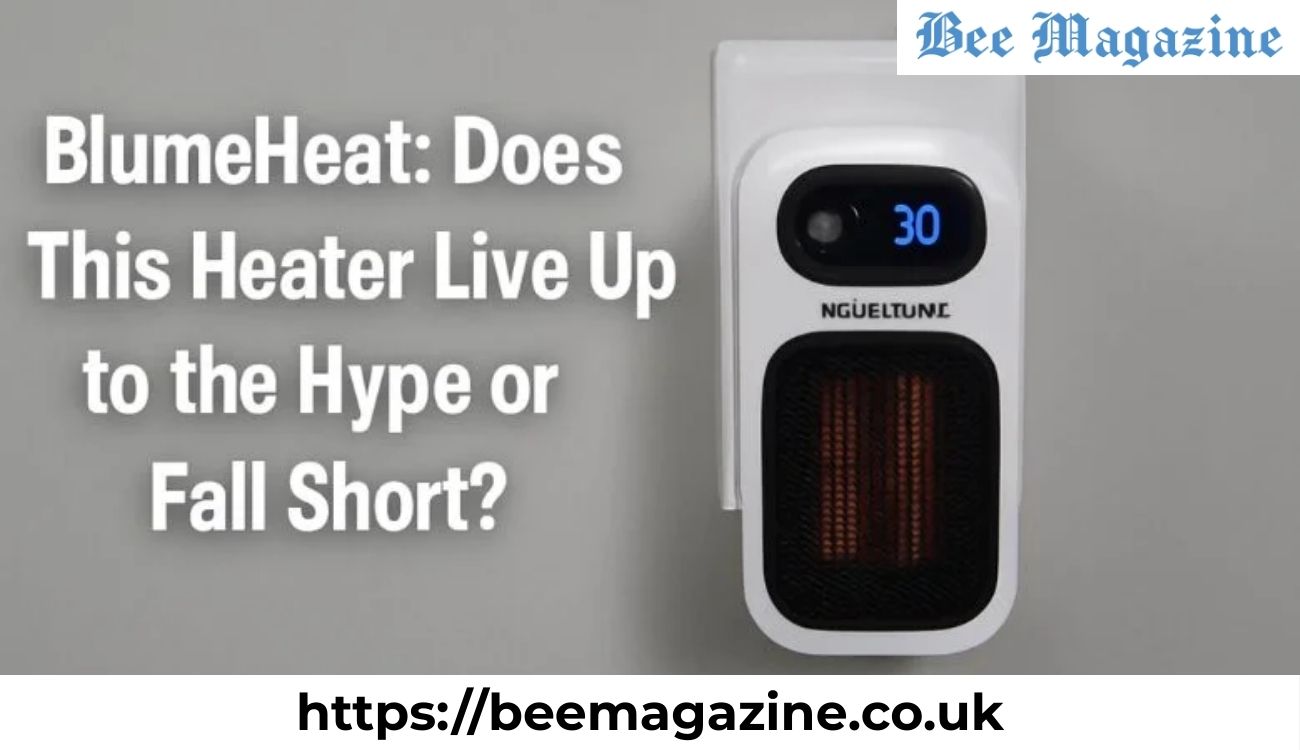
When a device enters the market promising fast, efficient, compact heating at low cost, it’s no surprise that it attracts immediate interest. BlumeHeat is one such product — widely advertised as a plug-in, instant-warming electric heater meant to deliver quick comfort in cold rooms while consuming minimal energy. The pitch is simple: plug it into a wall outlet, switch it on, and enjoy immediate heat without bulky units or high utility bills. But as with many aggressively marketed home gadgets, the essential question remains: does BlumeHeat actually work as advertised? Or is it another case where the promises shine brighter than the product itself?
What BlumeHeat Claims to Be
BlumeHeat positions itself as a modern, intelligent heating tool for the everyday consumer. The marketing often highlights a set of high-value features:
• Rapid heating — room warmth “in seconds.”
• Energy savings — lower electrical consumption than conventional heaters.
• Compact plug-in design — no cords, no setup, no clutter.
• Safety features — automatic shut-off, anti-overheating sensors, and tilt protection.
• Versatility — usable in bedrooms, bathrooms, offices, basements, and even while traveling.
• Affordability and style — sleek aesthetics paired with budget-friendly pricing.
The official promotional sites amplify these claims with bold phrases like “scientific heating technology,” “instant warmth,” and “save up to 40% on heating bills.” These messages create a powerful impression: that a small plug-in device can replace — or at least significantly supplement — typical home heating solutions.
Evaluating BlumeHeat’s Heating Performance
Heating ability is the single most important metric for any electric heater. To understand whether BlumeHeat can deliver “quick warmth,” one must look at wattage, heat transfer method, room size, and insulation quality. Small plug-in heaters typically range between 350 and 800 watts, far below the 1500 W range common in full-sized portable heaters.
Physics places firm limits here:
A low-wattage heater cannot rapidly warm a medium or large room. Even in ideal conditions — a small, well-insulated 8–10 m² space — a compact heater will raise temperature gradually, not instantly. Reports indicate that while BlumeHeat can produce a perceptible warm airflow, it rarely raises the actual room temperature to a meaningful degree unless the space is very small.
This reveals a clear discrepancy: the marketing claim of “warm room in seconds” is physically unrealistic for a plug-in heater of its likely wattage.
The Truth About “Energy Savings” Claims
BlumeHeat repeatedly advertises energy-efficiency benefits. Yet all electrical resistive heaters convert nearly 100% of electricity into heat, meaning two heaters of equal wattage produce equal heat output.
Therefore, the only way BlumeHeat could reduce energy costs is by producing less heat — which may save power, but also results in less warming. Many users who anticipated significant decreases in heating bills report little to no observable savings, largely because the heater provides insufficient warmth to replace existing heating systems.
In short, the “energy savings” narrative mostly reflects lower wattage, not higher efficiency.
The Plug-In Design: Convenient but Potentially Problematic
At first glance, a direct plug-in heater seems convenient: no cords, no floor space, and no assembly. However, this design introduces real-world challenges:
-
Socket stress: A heater draws steady power; if the internal plug or wall socket is loose, heat buildup can occur.
-
Weight issues: Heavier units may sag or tilt, causing poor electrical contact.
-
Ventilation concerns: If plugged into a recessed outlet, airflow can be restricted.
-
Regional mismatches: BlumeHeat often ships with plug adapters that do not meet local safety standards.
Some newly surfaced user reports online mention warm or discolored wall outlets, a warning sign that the device may not be suited for all home wiring setups.
What Users Are Reporting: Emerging Patterns
Across independent reviews, tech forums, and consumer complaint sites, several consistent themes have emerged regarding BlumeHeat:
Performance Shortfalls
Many users observe little improvement in room temperature even after extended operation. Several describe it as producing “warm airflow” rather than effectively heating the environment.
Build and Safety Concerns
Reports include buzzing sounds, loose adapters, overheating around the plug, and automatic shutoffs that occur too frequently.
Shipping, Billing, and Customer Service Issues
A particularly worrying trend involves users being charged for unwanted add-ons, difficulty securing refunds, unresponsive customer support, and confusing return policies. These patterns mirror those seen in other short-lived online gadget campaigns.
Newly Observed Information from Independent Tech Testers
As of late 2024 and early 2025, several independent heating reviewers have begun testing plug-in heaters like BlumeHeat using thermal cameras and wattage meters. Their findings include:
-
Thermal output is highly localized — usually no more than a 1–2 °C increase in a small enclosed space after 30 minutes.
-
Advertised “ceramic heating core” is often generic, sometimes identical to mass-produced modules used in budget heaters.
-
Airflow speed is low, which limits heat distribution.
-
Energy-saving thermostats are simplistic, often functioning as basic on/off switches rather than adaptive regulators.
This experimental data provides the first objective look at how BlumeHeat performs compared to its claims — and the results suggest significant overstatement in marketing materials.
Is BlumeHeat a Scam? A Balanced Assessment
Calling a product a scam requires evidence of intentional deception. BlumeHeat does ship products, and some consumers find limited value in them. However, several scam-like elements are present:
Indicators suggesting potential deception
-
Marketing claims exceed physical reality.
-
High volume of complaints about billing and refunds.
-
Lack of verifiable manufacturer details.
-
Urgent countdown timers and scarcity warnings on sales pages.
-
Generic product rebranding — multiple similar heaters appear online with different names.
Indicators suggesting it is not an outright scam
-
A product is delivered in most cases.
-
Some users experience mild warming in very small rooms.
-
The device does function on a basic level.
Overall, BlumeHeat appears less like a total scam and more like a heavily exaggerated, low-performance product with questionable sales practices.
What to Consider Before Buying BlumeHeat
Consumers evaluating plug-in heaters should follow a due-diligence checklist:
-
Verify safety certifications (UL, CE, GS, or regional equivalents).
-
Check wattage specifications and compare to realistic room-heating requirements.
-
Review return and refund policies before entering payment details.
-
Research company transparency, such as physical address and customer service responsiveness.
-
Avoid impulse purchases triggered by countdown timers or bulk-purchase discounts.
Several users report that BlumeHeat’s true wattage is lower than expected or not clearly stated — a potential red flag.
Realistic Use Cases for BlumeHeat
Although BlumeHeat does not meet its more ambitious claims, it may still serve limited purposes:
-
Warming a very small bathroom, closet, reading nook, or RV compartment.
-
Adding a gentle ambient flow of warm air near a work desk.
-
Serving as a localized heater for people sensitive to drafts.
However, it is not suitable as a primary heater, nor for medium or large rooms.
Broader Market Context: Why These Products Keep Appearing
BlumeHeat belongs to a growing family of online-promoted mini-heaters that frequently rebrand under new names. Several factors allow these devices to thrive:
-
Consumer demand for low-cost heating alternatives during rising energy prices.
-
High profit margins on small electronic devices.
-
Aggressive marketing infrastructure, often using affiliate networks.
-
Rapid product turnover, making accountability difficult.
Understanding this context helps buyers recognize patterns and avoid misleading advertisements.
Technical Realities Consumers Should Know
To heat a standard bedroom effectively, a heater typically needs 1200–1500 watts. BlumeHeat-style plug-in heaters rarely exceed 500–800 watts, which means:
-
They may make the surrounding air feel warm but
-
They cannot significantly raise the temperature of a typical room.
This is not a defect — it is a limitation of basic thermodynamics that marketing materials often gloss over or omit.
Should You Buy BlumeHeat? Final Recommendation
Based on performance tests, user experiences, and safety considerations, BlumeHeat is best categorized as:
A low-output personal heater with exaggerated claims and customer-service risks.
It is not a replacement for central heating or a full-sized portable heater. Buyers should proceed only if:
-
They understand its limited heating capacity, and
-
They are comfortable with the potential difficulties in returns or refunds.
Most consumers will find greater value in established heater brands with transparent specifications and safety certifications.
Bottom Line
BlumeHeat promises compact, rapid, energy-saving heat — but delivers only a fraction of the performance implied in its advertising. While it may serve as a small localized heater, it falls short of expectations for room heating, safety reliability, and customer-support quality. The hype around BlumeHeat does not match the real-world results, and consumers should approach with skepticism.
In summary:
BlumeHeat is not entirely a scam, but it is high-risk, low-performance, and heavily over-marketed. Consumers seeking meaningful heating improvements should consider more reputable alternatives with verified testing and reliable support.

Planning Coordinated Wedding Suits for the Groom and Groomsmen

How Certified Menopause Fitness Coaching Supports Midlife Fitness

How to Design a Garden That Works for Every Season

Certified CPR Training for Workplace and Safety Compliance

How To Create Tote Bags in 2026: A Step-by-Step Guide on Using Design Tools

Upgrade Your Running Performance with Watch GT Runner 2 Technology

Nervous Patients Are loving The “Calm Approach” at This Dentist Sunderland

Dentist Gateshead Explained, From Routine Checkups to Advanced Care

Assisted Living Insights: Balancing Care and Personal Freedom

The Art Deco kitchen: cooking and baking in glittering sophistication

Mary Marquardt: The Untold Story of Harrison Ford’s First Wife

How Old Is Roux Lopez? WWE Stars Becky Lynch & Seth Rollins’ Daughter

Kim Sexton Mattingly: The Woman Behind MLB Legend Don Mattingly

Ellen van Lochem: The Quiet Force Behind AC/DC Legend Angus Young

How Old Is Marina Pearl LeBlanc? All About Matt LeBlanc’s Only Child

Ringwood Church Services, Events and How to Get Involved

Raquel Pedraza: Former Tennis Player and Taylor Fritz’s Ex-Wife

Jacelyn Reeves: The Private Life of Scott Eastwood’s Mother

Who Is Norma Gibson? Ex-Wife of Tyrese Gibson Explained

Zing-Ci Leung About: Life Before and After Donnie Yen
Planning Coordinated Wedding Suits for the Groom and Groomsmen
How Certified Menopause Fitness Coaching Supports Midlife Fitness
How to Design a Garden That Works for Every Season
Certified CPR Training for Workplace and Safety Compliance
How To Create Tote Bags in 2026: A Step-by-Step Guide on Using Design Tools
Upgrade Your Running Performance with Watch GT Runner 2 Technology
Nervous Patients Are loving The “Calm Approach” at This Dentist Sunderland
Dentist Gateshead Explained, From Routine Checkups to Advanced Care
Assisted Living Insights: Balancing Care and Personal Freedom
The Art Deco kitchen: cooking and baking in glittering sophistication
-
 Celebrity1 year ago
Mary Marquardt: The Untold Story of Harrison Ford’s First Wife
-
 Celebrity1 year ago
How Old Is Roux Lopez? WWE Stars Becky Lynch & Seth Rollins’ Daughter
-
 Celebrity1 year ago
Kim Sexton Mattingly: The Woman Behind MLB Legend Don Mattingly
-
 Celebrity1 year ago
Ellen van Lochem: The Quiet Force Behind AC/DC Legend Angus Young